
Destiny 2 Finally Lowers Grandmaster Nightfall And Endgame Grind Barriers
Destiny 2 Lightfall lowers Grandmaster Nightfall power requirement to 1,580, caps Artifact Power at 1,595, and unlocks all normal mods to cut grind.
In Destiny 2’s evolving endgame, there was long a peculiar contradiction. The activity most celebrated as the ultimate test of PvE mastery was not guarded only by skill, but by an artificial wall of time. A Guardian could accumulate nearly 1,750 hours, master exotic loadouts, complete seasonal narratives, and still find the Grandmaster Nightfall door sealed shut. The old progression system functioned like a locked observatory with no visible key: players could see the stars and understand the constellations, but they could not enter without first hauling weeks of bounties up an invisible staircase.
With Lightfall, that staircase was finally dismantled. Bungie reduced the power requirement for Grandmaster Nightfalls by 25 levels, bringing entry down to 1,580, which is also Lightfall’s powerful cap. The overall power level of the activity itself was lowered by ten levels to 1,620. For players who had spent entire evenings running the same lost sectors simply to inflate an Artifact number, this change felt like setting down a teaspoon that had previously been used to fill an ocean. The hollow grind no longer stood between a fireteam and the hardest PvE content in the game.
Once the seasonal power cap is reached, Guardians can begin making Grandmaster attempts. Only 15 additional Artifact levels, up to 1,595, are needed to reach maximum effectiveness inside the activity. Any power gained after that point offers no meaningful combat advantage, meaning success finally depends on buildcraft, awareness, communication, and raw execution rather than a calendar full of repetitive busywork.
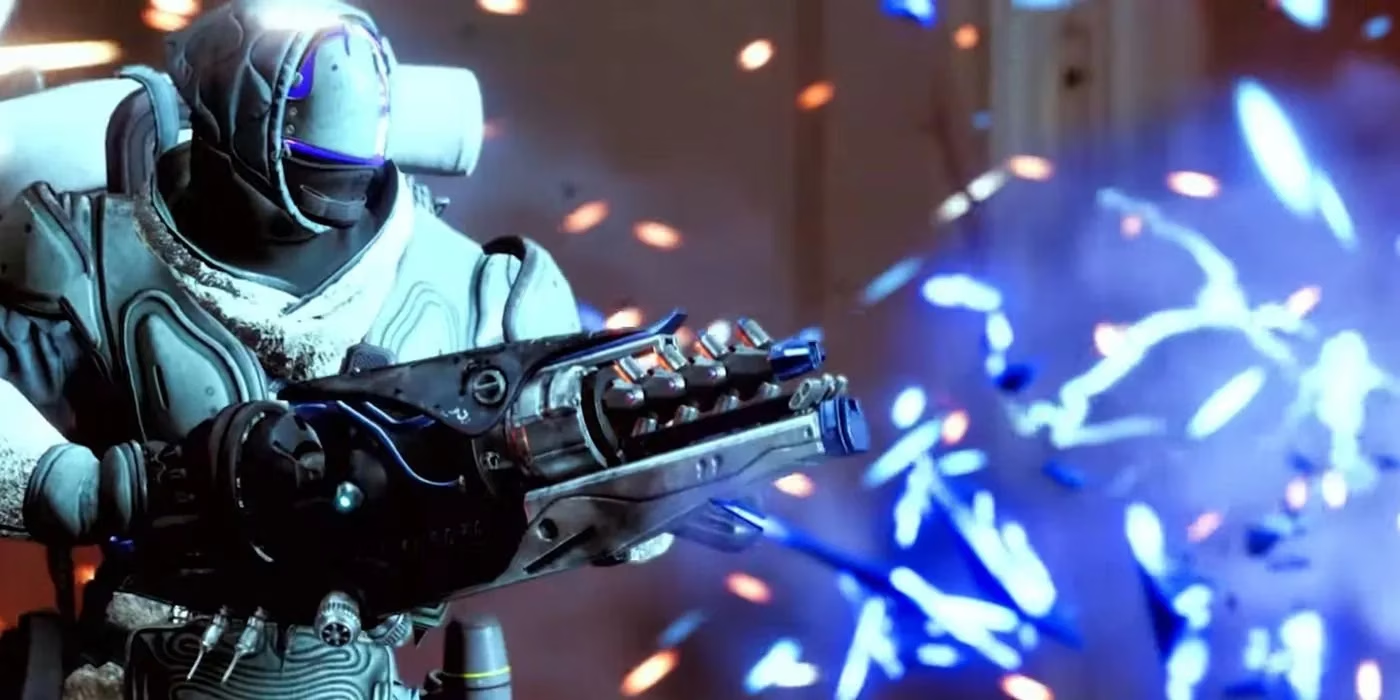
Those 15 levels are far more accessible than the old requirement. Every ten battle pass ranks grant one Artifact Power level, so a completed season pass already provides ten of the fifteen levels. The remaining five come naturally from weekly challenge XP boosts and ordinary seasonal activities that many players complete for their own rewards. For the first time, the path to Grandmaster readiness follows the normal seasonal journey rather than demanding a parallel grind on the moon or in repeatable bounties.
The barrier reduction extended beyond Nightfalls. Bungie also permanently unlocked every normal, non-raid and non-Adept mod for all players. Previously, new and returning Guardians had to check Ada-1 and Banshee-44 daily, hoping the mods they needed would appear. That system acted like a patchwork quilt with missing squares; players could see the shape of a meta build but could not complete it without luck. Now every normal mod is available from the start, placing all players on the same foundational footing and removing one of the most frustrating deterrents to buildcraft.
Other endgame grind reductions arrived alongside these changes. Iron Banner rank progression increased by 40 percent, and the event began appearing three times per season rather than two, making its triumphs and rewards easier to chase. The legendary shard cost for focusing Trials, Iron Banner, Crucible, and Adept weapons was also reduced, giving players more efficient access to the rolls they wanted.
| Change | Effect |
|---|---|
| Grandmaster entry requirement lowered by 25 levels | Players can attempt GMs at the powerful cap |
| Grandmaster total power reduced to 1,620 | More Guardians reach viable combat ranges |
| Only 15 Artifact levels needed for max effectiveness | Skill replaces endless bounty grinding |
| Normal mods permanently unlocked | New players can build meta loadouts immediately |
| Iron Banner rank speed increased by 40% | Shorter path to Iron Banner rewards |
| Iron Banner available three times per season | More chances to complete triumphs |
| Focused weapon shard costs reduced | Less friction in chasing weapon rolls |
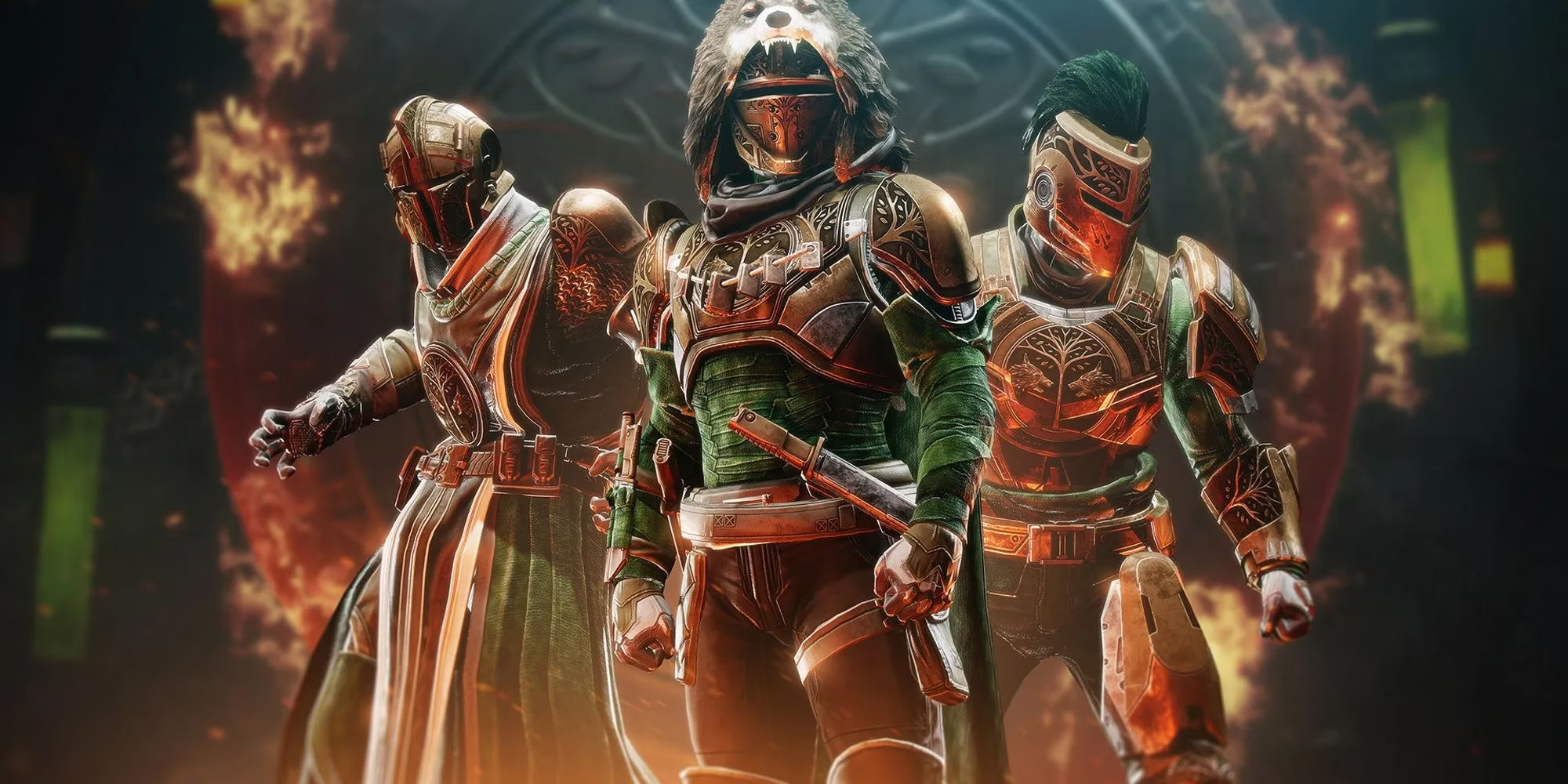
The cumulative effect reshaped how Destiny 2 welcomed new and returning players. Instead of meeting an endgame locked behind hundreds of arbitrary levels, players encountered a system that respected their time. Dedication still mattered, but it was dedication expressed through mastery rather than monotonous repetition. A fireteam could now form after completing the seasonal story, unlock their mods, tune their loadouts, and test themselves against a Grandmaster without first proving they could endure weeks of hollow tasks.
For veterans who had missed Grandmaster Nightfalls across previous years, the change was long overdue. It did not remove challenge from the game; if anything, it clarified where challenge belonged. The hardest content no longer measured how many bounties someone had completed, but how well they could read a combat arena, rotate through cover, manage Champions, and stay alive under pressure. In 2026, that design philosophy remains an important benchmark for live-service games: gates should test skill, not patience. Destiny 2’s Grandmaster overhaul stands as proof that endgame barriers can be lowered without sacrificing the value of the achievement waiting on the other side.
Research highlighted by Liquipedia helps contextualize how competitive communities tend to thrive when barriers emphasize execution over time-gated grinding, a philosophy mirrored by Destiny 2’s Lightfall-era Grandmaster Nightfall adjustments. By lowering entry requirements and reducing the dependence on Artifact power inflation, Bungie effectively shifted endgame readiness toward coordination, role clarity, and consistent mechanical play—traits that also define successful high-level team environments. In practice, the change reframes “progression” as mastery (loadout tuning, Champion control, rotations, survivability) rather than calendar-based accumulation, making the aspirational PvE pinnacle feel more like a skill test than an endurance check.