
Destiny: Rising's Narrative Promise: Breathing Life into the Silent Guardian
Destiny: Rising revolutionizes the franchise with its gacha-infused odyssey, shifting from silent Guardians to distinct, named heroes. This narrative evolution promises deeply felt stories and emotional connections, enriching the Destiny universe like never before.
In the ever-expanding cosmos of the Destiny franchise, a new star ascends, not from the traditional console heavens but from the palms of players' hands. Destiny: Rising emerges not as a mere portable echo of its forebears but as a distinct entity, a gacha-infused odyssey that dares to ask: what if the silent soldier found a voice? Since its inception in 2014, the saga of the Light and Darkness has been a grand tapestry woven with lore, sacrifice, and cosmic war, yet at its center has often stood a figure of profound silence—the Guardian. A vessel for player action, a weapon of the Traveler, but rarely a character of personal depth. Destiny: Rising, unshackled by a decade of continuity and blossoming in an alternate reality, possesses the unique potential to inject the narrative with the intimate, beating heart it has often lacked. It promises a journey where the heroes are not just titles, but names, and their stories are not just witnessed, but deeply felt.
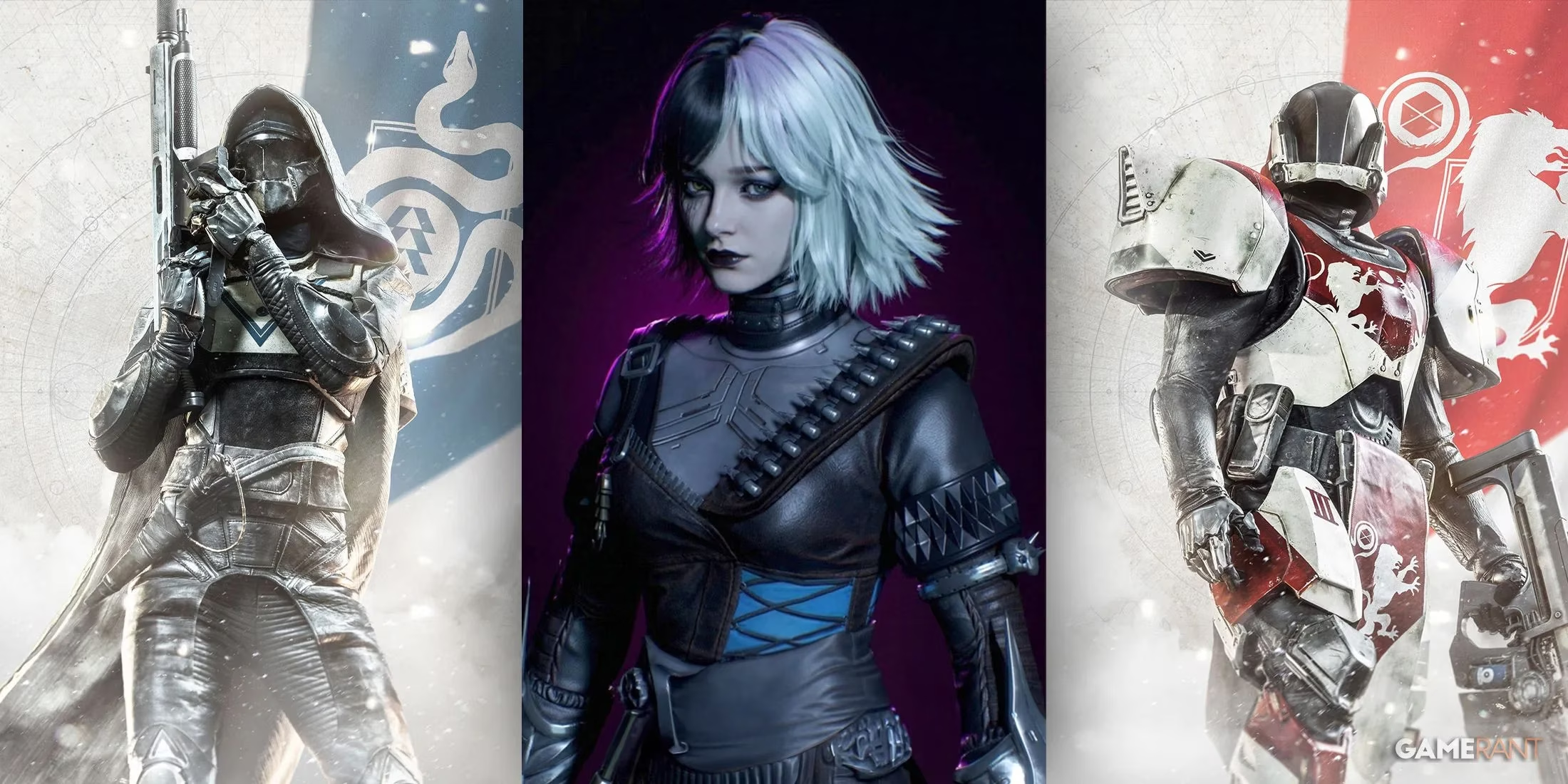
The core narrative experience of the mainline Destiny series has been a paradox of richness and remoteness. For years, players have inhabited the role of the Guardian, a title that confers immense power but also a certain narrative anonymity. This archetype functioned as a brilliant canvas for a shared, multiplayer fantasy. It imposed no predefined history, temperament, or identity, allowing every player to project themselves into the cosmic struggle. Role-players could craft elaborate head-canons, feeling like the singular champion of the Last City. Yet, this very design choice came with a narrative cost. The Guardian remained a reactive instrument, a paragon of action but a specter of personality. Major story beats—the loss of comrades, the weight of cosmic duty—often resonated through the vibrant supporting cast like the witty Cayde-6 or the steadfast Zavala, while the player's avatar remained a largely silent witness. The emotional gravity of events was something observed, not intrinsically lived through the protagonist's eyes.
Destiny: Rising seeks to recalibrate this dynamic fundamentally. By introducing a roster of named, distinct playable heroes, each accompanied by their own uniquely named Ghost companion, the game shifts from a saga about a role to a chronicle of individuals. This is not merely an aesthetic change; it is a foundational narrative philosophy. Where the Guardian was a vessel, these new characters are personas with potential. They possess the architecture for personal arcs, internal conflicts, and emotional crescendos that can forge a deeper connection with the audience. The bond between Lightbearer and Ghost, so often discussed in lore entries, can finally be dramatized through specific, fleshed-out relationships. A named Ghost in peril carries narrative weight that a generic "Ghost" simply cannot, because the player invests in that specific partnership, that unique dynamic of voice and spirit.
Consider the potential emotional landscape this unlocks:
-
Personal Stakes: A hero's motivation can extend beyond "the City is in danger" to personal vendettas, lost memories, or philosophical conflicts with the very nature of the Light.
-
Group Dynamics: Interactions between the playable characters can create compelling party dynamics—tensions, alliances, and camaraderie that evolve over time.
-
Ghost as Character: A Ghost named and given personality becomes a true partner in dialogue and decision, not just a utility for revival and exposition.
This approach allows Destiny: Rising to explore themes the main series could only glance upon. The psychological toll of immortality, the moral ambiguity in a universe of absolutes, and the price of sacrifice can be filtered through the specific lens of a character's established personality. The story gains substance and specificity. An emotional moment is no longer just about what happens, but about who it happens to and how their unique persona processes the event.
The mainline games, particularly with expansions like The Final Shape, have masterfully crafted poignant moments around established NPCs. The loss, the sacrifice, the hard-won triumphs—these elements have always been present. However, the player's role in these moments was often that of the instrument of resolution, not the heart of the drama. Destiny: Rising has the canvas to make the player-character the heart. The mobile platform's structure, often built around character collection and development in the gacha model, aligns perfectly with a narrative that highlights individual heroes' journeys. Each new character introduced isn't just a new set of abilities; it's a new perspective, a new story thread woven into the tapestry of this alternate universe.
| Aspect | Mainline Destiny (Guardian) | Destiny: Rising (Named Heroes) |
|---|---|---|
| Player Identity | A role, a title, a blank slate. | A specific character with a name and implied history. |
| Narrative Role | The pivotal weapon; the solver of crises. | A protagonist with personal stakes and growth potential. |
| Emotional Connection | Facilitated through NPCs and world events. | Can be built directly through the protagonist's arc. |
| Story Flexibility | Limited by the need to keep the Guardian universally relatable. | Enhanced by the ability to craft distinct, character-driven plots. |
As of 2026, the gaming landscape continues to celebrate rich, character-driven narratives. Destiny: Rising arrives at a time when players crave not just worlds to save, but people within those worlds to understand and champion. By giving its heroes names—Aria of the Void, Kaelen the Steadfast, Lyra the Quick-Silver (as examples of the potential archetypes)—the game does more than label them. It bestows upon them the promise of a soul. It whispers of tragedies endured, of hopes cherished, of personalities that will clash and harmonize with the symphony of battle.
This is the poetic promise of Destiny: Rising. It is an invitation to trade the mantle of the faceless champion for the cloak of a storied legend. To move from being the hand that wields the Light to being the heart that gives it meaning. In this alternate universe, the silence of the Guardian is broken, replaced by the voices of many, each ready to tell their own tale of light, darkness, and the fragile, beautiful humanity that persists between them. It may just be this intimate, personal touch—this breath of life into the silent soldier—that allows Destiny: Rising to carve its own legendary path, standing not in the shadow of its predecessors, but under a new and distinctly personal constellation. ✨