
Indiana Jones and the Dial of Destiny: The Satisfying Conclusion to a 40-Year Journey
Indiana Jones and the Dial of Destiny delivers a poetic full-circle moment for Harrison Ford's final adventure as a relic out of time.
In 2023, the crack of a bullwhip echoed one last time through theaters as Harrison Ford slipped into the worn leather jacket of Indiana Jones for what was promised to be a final adventure. Indiana Jones and the Dial of Destiny arrived with the weight of four decades of history, and although critics were divided and the box office returns disappointed, time has been kind to this curious coda. Three years later, looking back from 2026, the film reveals itself not as a stumble but as a carefully orchestrated full-circle moment—one that honored the very soul of a character who was always racing against the clock.
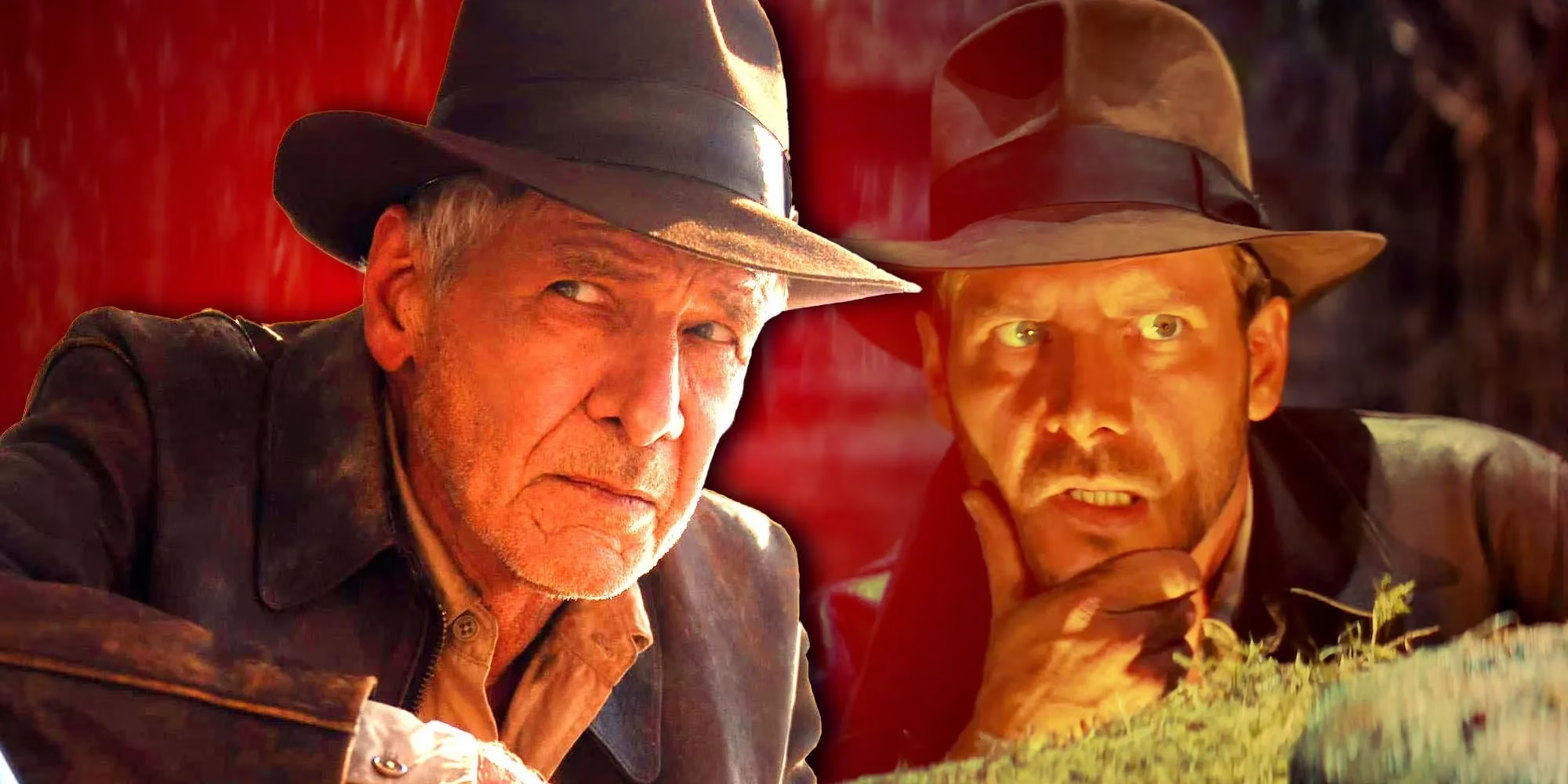
The story picks up in 1969, a tumultuous year of moon landings and social upheaval, where an aging Indy feels more out of step than ever. He’s no longer the whip-cracking professor who outran boulders and Nazis; now he’s a man who grumbles about the noise of new generations while the world spins on without him. Enter his goddaughter Helena Shaw, a quick-witted, ethically flexible archaeologist who pulls him into a frantic search for the Antikythera—a device built by Archimedes in 212 BC, rumored to be a time-travel mechanism. What seems like just another relic hunt gradually transforms into something far more profound.
From the bustling markets of Tangier to the ancient caves of Greece, the film unfolds like a classic serial, full of narrow escapes and fisticuffs. Yet underneath the familiar set pieces, James Mangold (taking over directing duties from Steven Spielberg) wove a quieter thread: the realization that Indiana Jones is himself a relic. Watching him drive a battered scooter through Moroccan streets, out of breath and out of his time, the metaphor becomes achingly clear.
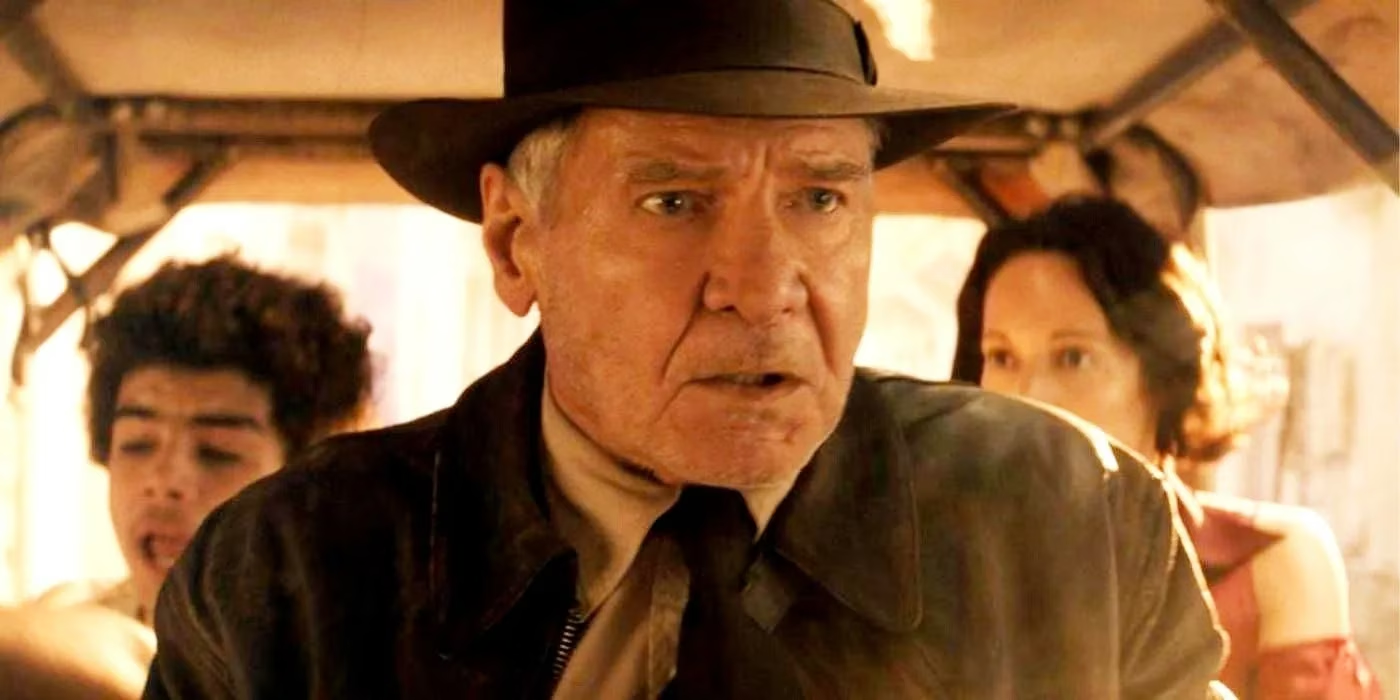
This was always the core of George Lucas and Steven Spielberg’s vision. Indy was born from the 1930s adventure serials, from Flash Gordon and Zorro, from the smoky noir of Casablanca and The Maltese Falcon. His syntax, his fedora, his stubborn refusal to be impressed by modern technology—every detail marked him as a “man out of time.” The franchise never let audiences forget that he was more at home in a dusty temple than a 1960s living room. And so, when the Dial of Destiny finally whirls to life and tears a hole in the sky, sending Helena and a wounded Indy hurtling back 2,000 years to the Siege of Syracuse, it isn’t just a plot twist. It’s the poetic completion of a 40-year narrative arc.
Picture it: the first time Indiana Jones steps into a past that isn’t a museum exhibit or a half-buried idol. He stands on a hill overlooking the ancient city, Greek soldiers clashing with Roman invaders in the distance. His hand trembles, his eyes fill with a lifetime of longing. All those dusty classrooms, all those endless lectures about pottery shards and ancient civilizations—finally, he is there. Not as a professor, not as a looter, but as a humble witness. For a few heartbeats, the man who spent decades chasing history is ready to become part of it. He tells Helena he wants to stay. In that moment, the audience realizes this isn’t about a magical gadget; it’s about letting go.
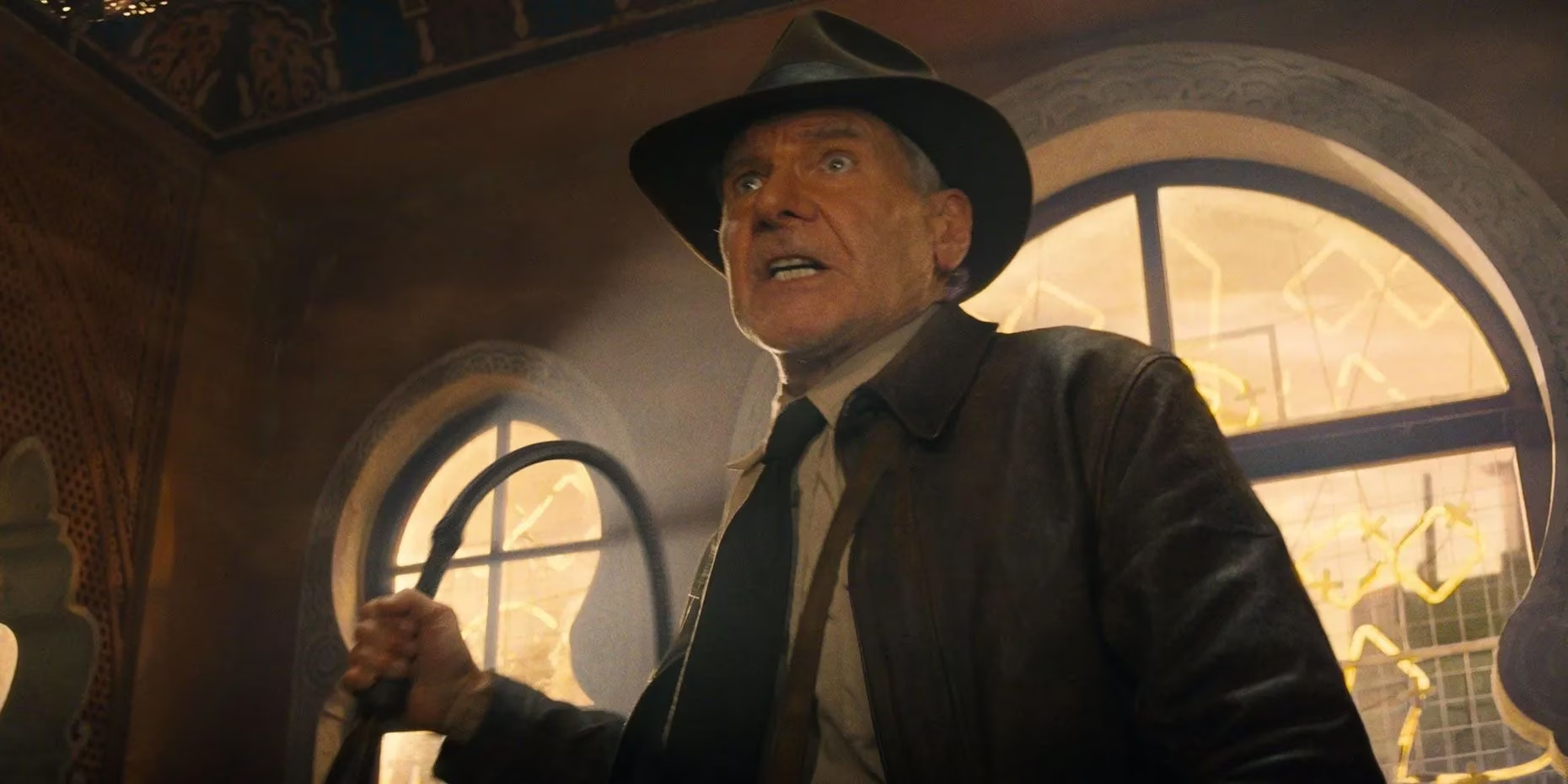
Mangold’s ending was bold enough to let the sentiment linger. Helena, recognizing that her godfather still has a future to live, drags him back through the portal. Later, back in 1969, Indy finds a quiet domestic reunion with Marion Ravenwood, the two of them reenacting the smallest of gestures—a hand touching a face, a familiar squabble—that speak to a lifetime of shared adventure. Critics who called the coda too saccharine missed the point. This wasn’t the franchise pandering; it was the franchise exhaling.
The “man out of time” finally came home in two senses: he glimpsed the ancient world he obsessed over, and then he returned to a present where he was no longer out of place. The film’s architecture mirrors this journey. It opens with a digitally de-aged Ford in a rip-roaring 1944 castle siege, a direct echo of the original trilogy’s brash energy, then gradually slows down, surrendering the spectacle for something more fragile and human. By the time the credits roll, you’ve watched a hero confront his own mortality and legacy, not with a bang, but with a smile.
From a 2026 vantage point, the commercial disappointment of Dial of Destiny feels almost irrelevant. Yes, its $357 million global gross against a $300 million production budget was a financial disaster for Disney. Yes, the Rotten Tomatoes score hovered in rotten territory for weeks. But these metrics fail to capture the film’s true achievement: completing the thematic puzzle that Lucas and Spielberg began in 1981. Early Indiana Jones movies thrilled audiences with the chase, but this final chapter asked a deeper question—what happens when the chase ends? The answer turned out to be profoundly moving.
The franchise should end here, not because of fatigue, but because the story is whole. Harrison Ford, now in his mid-80s, delivered a performance layered with resignation, mischief, and surprising tenderness. Watching him gaze across the siege-littered fields of Syracuse, you understand something that box office charts never will. This is a man who was always running toward history, and at the very end, history held him back.