
Ten FPS Games That Dared to Be Different: A Symphony of Bullets and Innovation
Explore the innovative world of Destiny 2's celestial ballet of gunplay and Guardian abilities, and experience the hyperrealistic immersion of Bodycam's unique first-person shooter perspective.
In a landscape teeming with familiar gunfire and recycled mechanics, the first-person shooter genre often risks succumbing to a monotonous rhythm. Yet, a daring few titles refuse to blend into the cacophony, choosing instead to compose their own symphonies of violence and vision. These are not mere games; they are audacious experiments in perspective, physics, and player expression. They challenge the very definition of a shooter, weaving space magic, bending time, and redefining movement itself. From the cosmic arenas of alien gods to the claustrophobic bayous of a cursed frontier, these games stand as monuments to creativity, proving that in the hands of visionary developers, a gun can be so much more than a tool—it can be a paintbrush, a puzzle piece, a key to another reality.
10. Destiny 2: A Celestial Ballet of Light and Lead
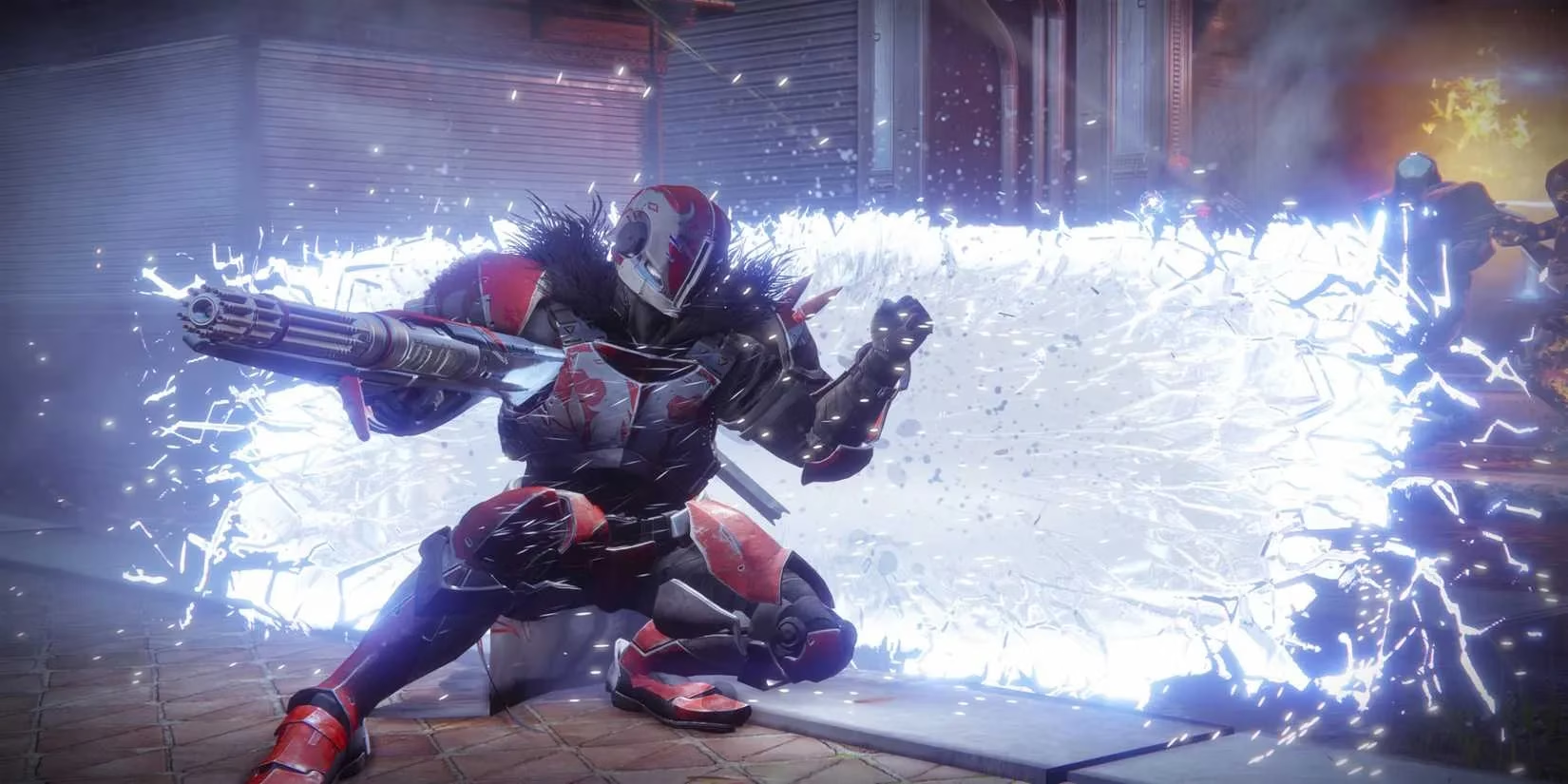
Destiny 2 transcends the conventional looter-shooter archetype, evolving into a grand cosmic opera. Bungie's enduring masterpiece earns its place through a harmonious fusion of tactile, satisfying gunplay and imaginative, elemental Guardian abilities. Players assume the mantle of a resurrected warrior, choosing from three distinct classes—Titan, Hunter, and Warlock—each branching into six subclasses that sing with unique playstyles. The true magic lies in the choreography: weaving bolts of solar flame, arcs of lightning, or shards of stasis into the dance of combat. Yet, the pinnacle of its design is found in its legendary Raids. These are not mere missions; they are orchestrated symphonies of cooperative challenge, demanding flawless communication and mastery. They are masterclasses in environmental storytelling and mechanical ingenuity, rewarding the dedicated with tales of triumph and exclusive arsenals.
9. Bodycam: Through a Lens, Darkly
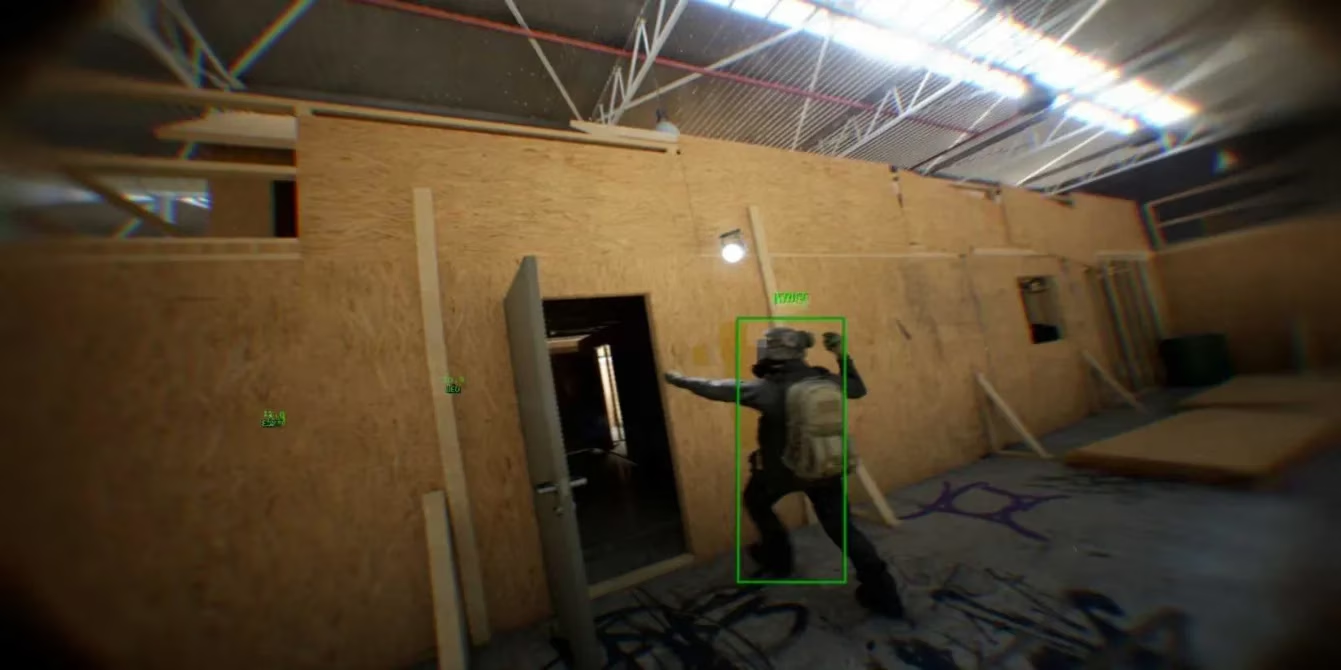
Bodycam pursues a singular, uncompromising vision: hyperrealistic immersion. By adopting the literal perspective of a body-mounted camera, complete with a disorienting fisheye lens and a stark, almost photorealistic art style, it forges an experience of unnerving intimacy. The world is viewed not as a super-soldier, but through the shaky, limited frame of a participant. This aesthetic choice is its defining feature, blurring the line between simulated gameplay and raw, found footage. The initial shock of recognition—the feeling that one is watching a recording rather than playing a game—is profound. In practice, this devotion to realism can manifest as a deliberate, weighty clunkiness in movement and interaction, a stark contrast to the fluidity of its peers. It is a game less about power fantasy and more about visceral, grounded tension.
8. Superhot: The Dancer in a Frozen World
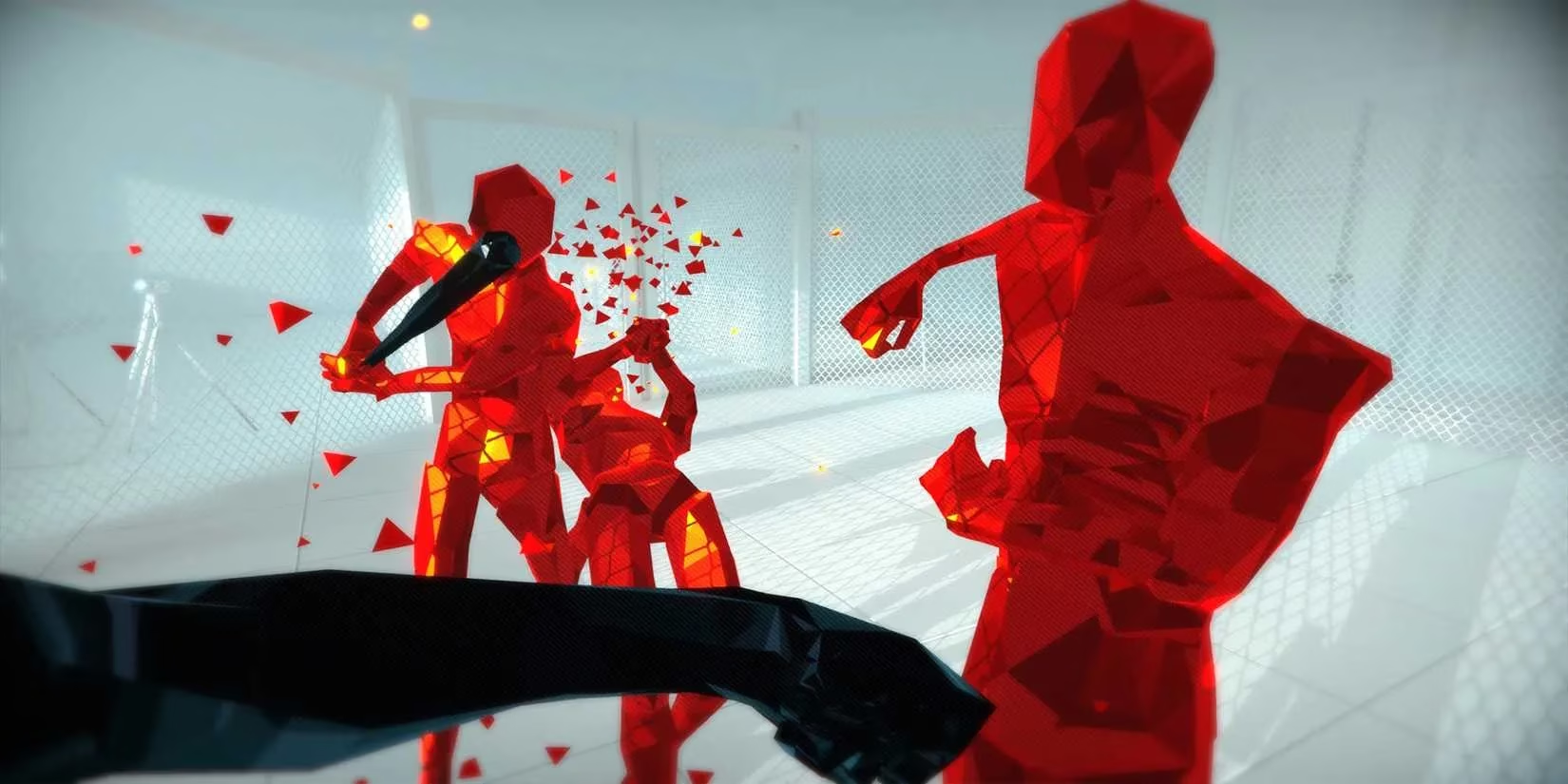
Superhot is a poem written in crimson and stillness. Its minimalist aesthetic—white environments, black weapons, and vibrant red enemies—sets the stage for its revolutionary central mechanic: time moves only when you move. This simple, profound rule transforms combat into a strategic ballet. Players become choreographers in a frozen tableau, planning intricate paths through hails of suspended bullets, disarming foes with calculated grace, and turning every encounter into a puzzle of motion. The post-level replay, which shows your actions in real-time, reveals the elegant violence of your performance. The game cultivates a unique power fantasy: not of unstoppable force, but of perfect, controlled reaction. Its VR iteration deepens this immersion, placing you bodily within its stylized, lethal diorama.
7. Bulletstorm: A Rhapsody in Ridiculousness
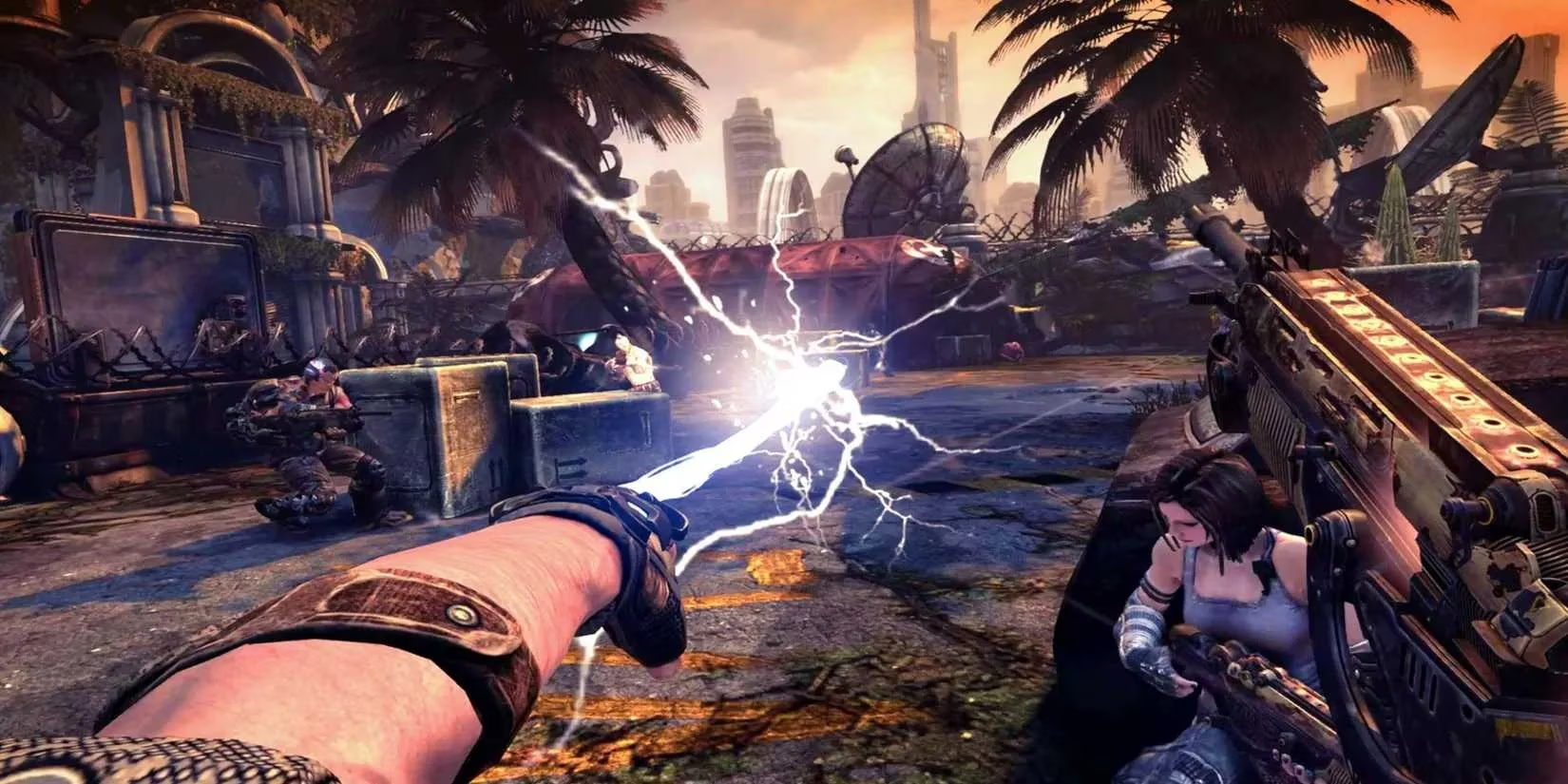
Bulletstorm is the genre's id, unleashed and amplified. It discards sober metrics of efficiency in favor of a singular currency: style. This is a game that rewards flair, creativity, and outright absurdity in dispatching enemies. Armed with an energy leash and a menagerie of outlandish weapons, players are encouraged to concoct the most elaborate kill chains imaginable. The gameplay loop is a playground of cause and spectacular effect: lasso a foe into the air, shoot a flammable barrel beneath them, then kick the flaming wreckage into their comrades. It is deliberately over-the-top and gloriously ridiculous, a carnival of carnage where the goal is to paint the battlefield with inventive brutality, a chaos that can be shared joyfully in cooperative play.
6. Portal: A Fugue in Non-Euclidean Space
Valve's Portal is less a shooter and more a revolution in spatial reasoning, wielding its portal gun as a conductor's baton for physics. The core mechanic—creating linked portals on flat surfaces—unlocks a universe of near-infinite navigational possibilities. The game's genius is in its elegant teaching: "Speedy thing goes in, speedy thing comes out." This principle allows players to build momentum, flinging themselves across vast chambers in a breathless, graceful arc. Each test chamber is a melodic puzzle, its solution found not in firepower, but in perspective and velocity. The sterile, clinical environment is given soul by the sinister, sardonic presence of GLaDOS, an antagonist whose passive-aggressive commentary provides a darkly humorous counterpoint to the cerebral gameplay. While its sequel expands the symphony, the original remains a pristine masterpiece of design and wit.
5. Bioshock: A Sonata of Splicers and Plasmids
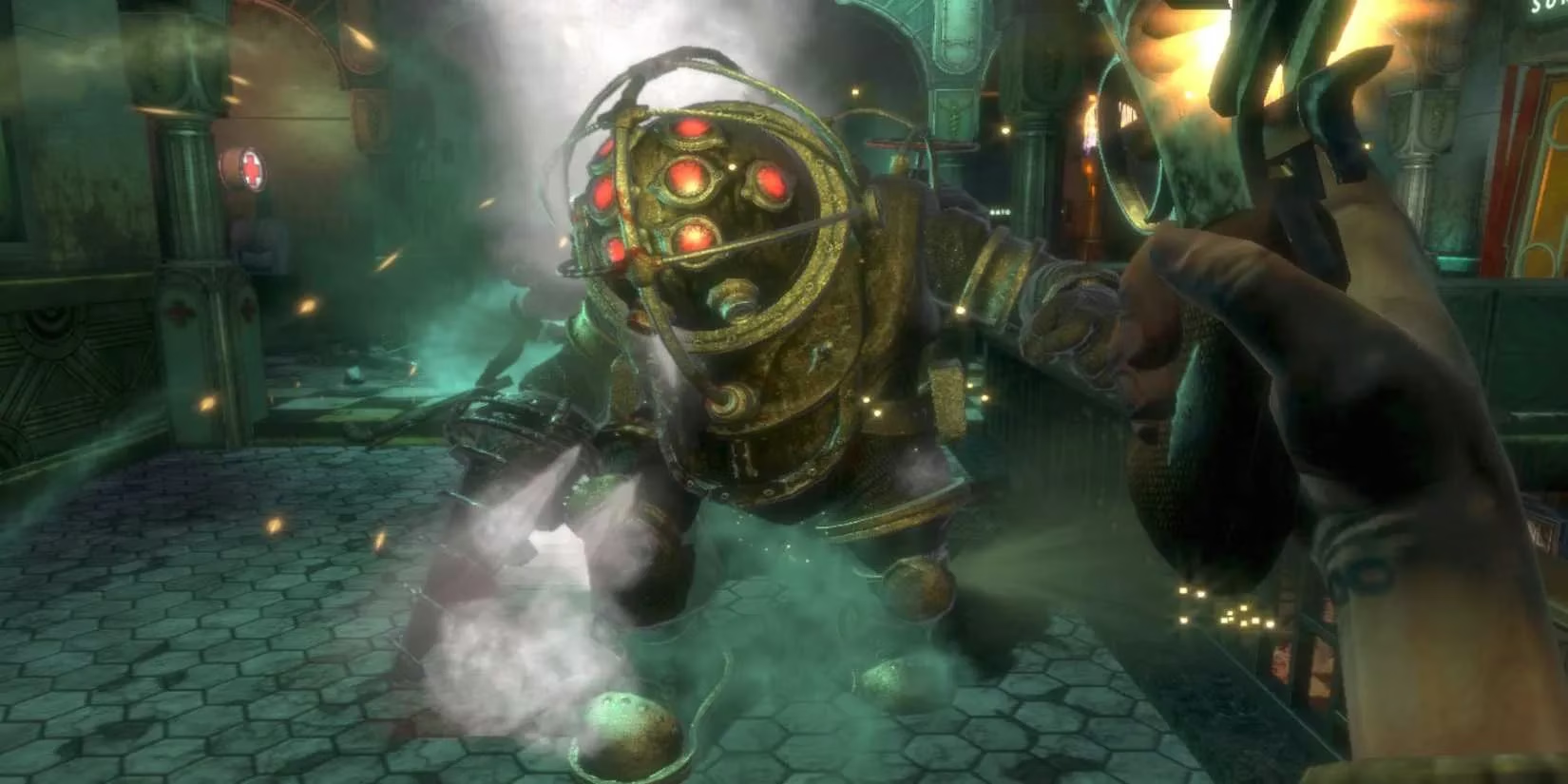
Bioshock marries a profound narrative with a system of injectable, genetic powers known as Plasmids. In the drowned art-deco nightmare of Rapture, combat becomes a grotesque art form. With a snap of your fingers, you can ignite foes, electrocute pools of water, or telekinetically hurl debris. These abilities are not mere supplements to gunplay; they are instruments for environmental manipulation and creative problem-solving. The Plasmids are imaginative and deeply integrated into the world's lore, representing the pinnacle and peril of its society's ambition. The trilogy explores and refines this synergy between gun and gene, but the original game's introduction to this duality—fighting splicers in leaking corridors while a philosophical nightmare unfolds—remains an unparalleled experience in atmospheric storytelling and empowering, visceral combat.
4. Splitgate: A Concerto of Portals and Projectiles
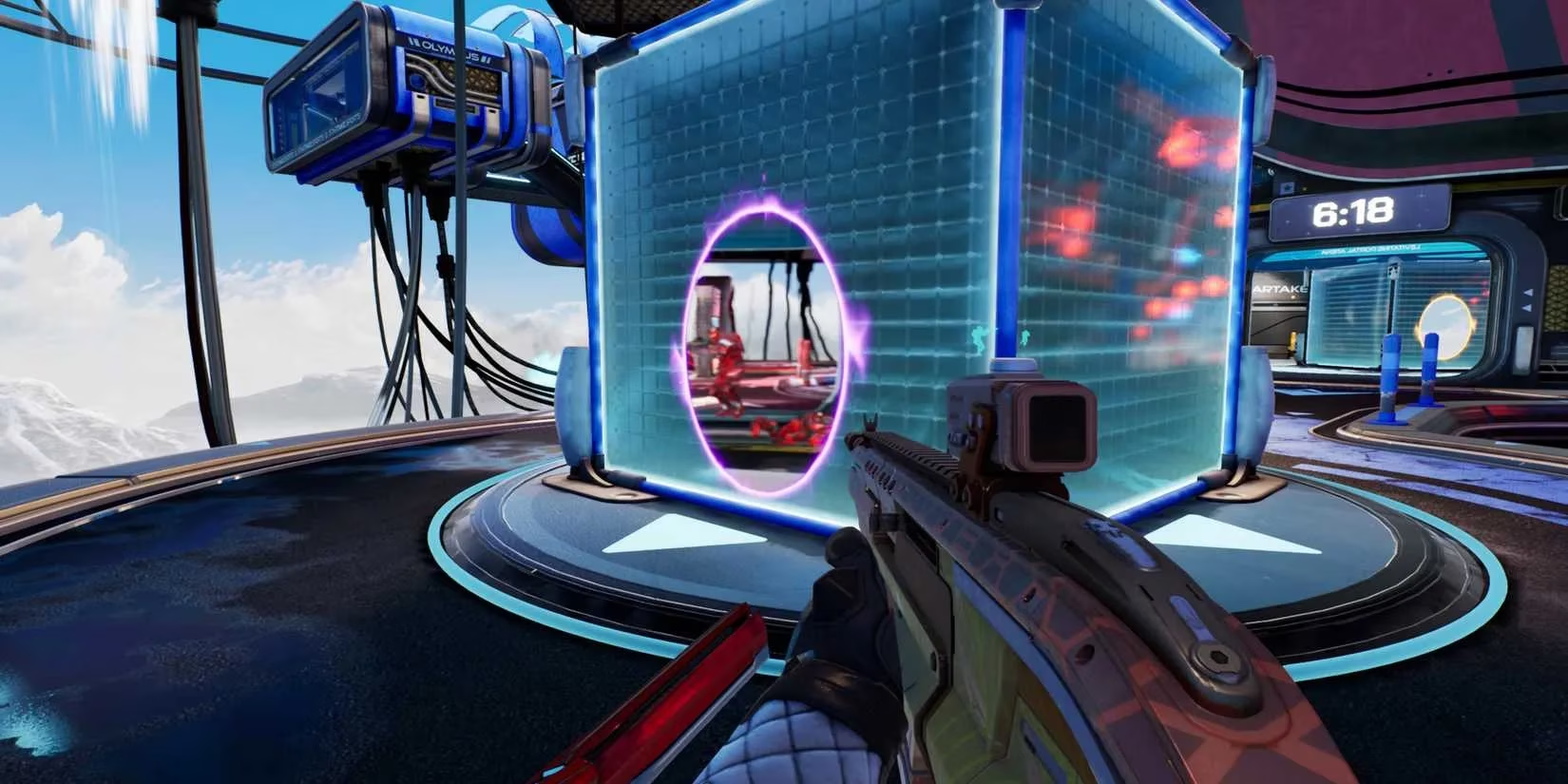
Splitgate performs a brilliant act of fusion, marrying the tight, arena-style gunplay reminiscent of Halo with the mind-bending portal mechanics of its puzzle-game inspiration. The result is a PvP shooter where the battlefield is not just a map, but a malleable web of potential pathways. The portal gun becomes the ultimate tool for tactical repositioning, lethal ambushes, and breathtaking mobility. High-level play resembles a high-speed chess match played in four dimensions, with players portal-hopping to gain positional supremacy, sniping through self-made windows, and executing flanks that defy conventional geometry. It allows for incredible, fluid skill expression. While its player base faced challenges, the legacy of its innovation endures, with the promise of a sequel on the horizon aiming to recapture that lightning in a bottle.
3. Sniper Elite 5: The Ballad of the Ballistic
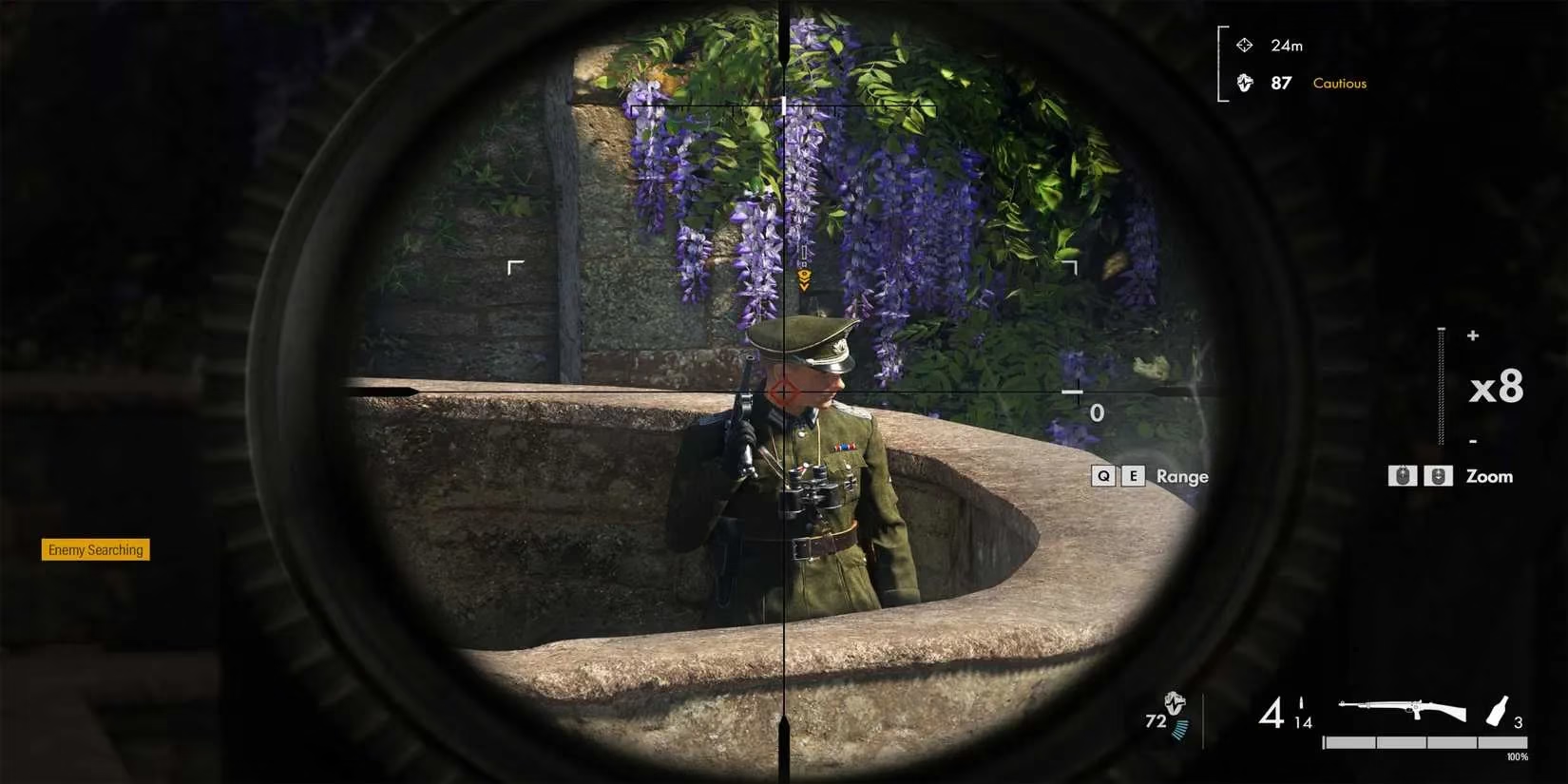
The Sniper Elite series dedicates itself to the art of the one perfect shot, and the fifth installment is its most visceral sonnet. Its signature X-Ray Kill Cam is a grisly, detailed ballet of biology and ballistics. Upon a successful long-range hit, time dramatically slows, allowing the player to trace the bullet's arc as it pierces the target, shattering bone and rupturing organs in a clinically impressively gory display. This mechanic transforms a simple act of marksmanship into a cinematic event, a reward system that celebrates patience, calculation, and precision. The games, particularly the fourth and fifth, offer sprawling sandboxes that encourage creative approaches to elimination, but the heart-stopping thrill of lining up that shot, accounting for wind and gravity, and witnessing the devastating consequence remains its unique and powerful core.
2. Hunt: Showdown: A Nocturne of Tension in the Bayou
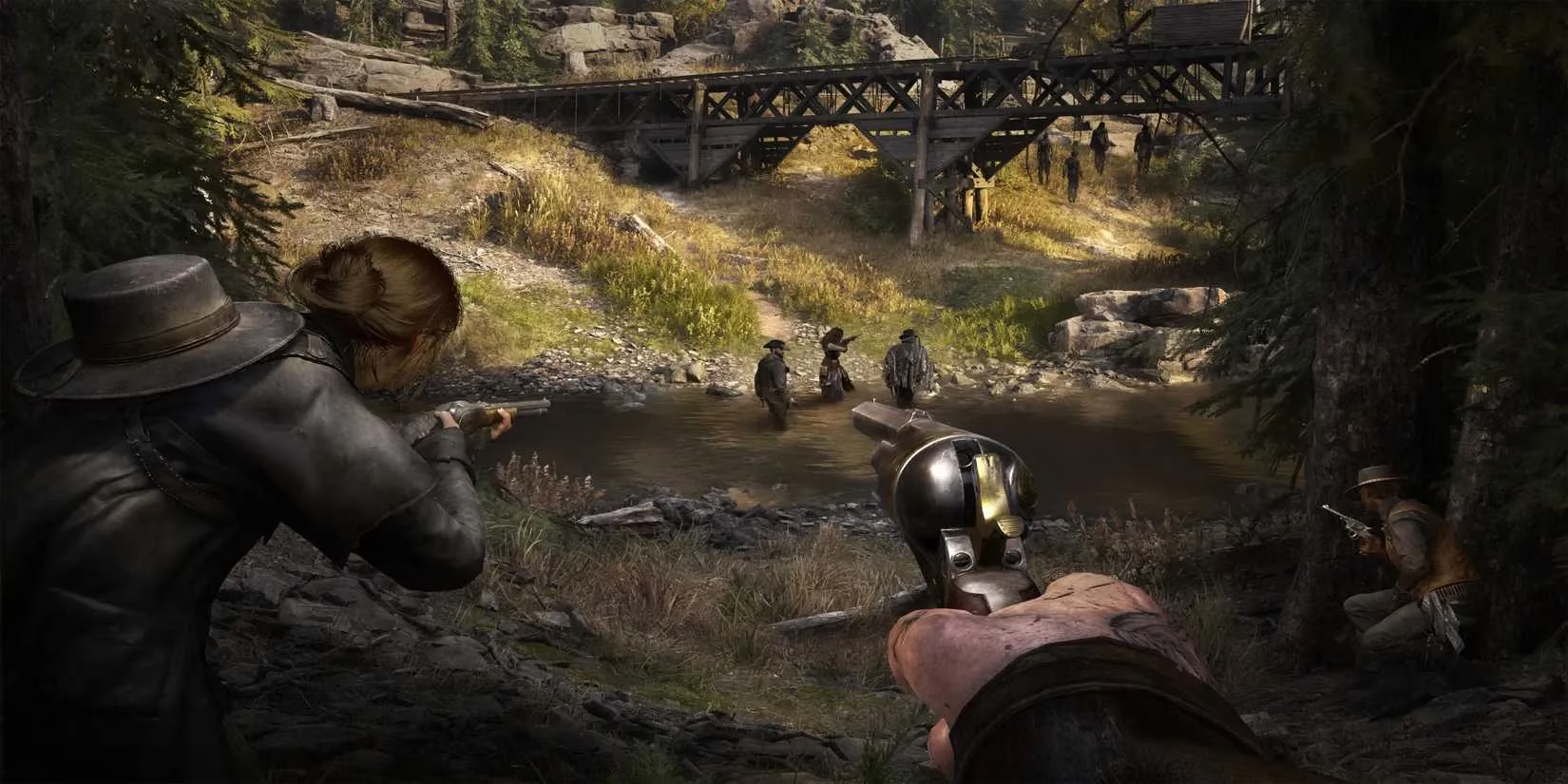
Hunt: Showdown is a haunting, atmospheric masterpiece—a tense PvPvE extraction shooter that forges an unparalleled gameplay loop. Set in a gothic, monster-infested Louisiana bayou, teams of hunters are pitted against each other and the environment. The objective is simple yet profound: track, battle, and banish a horrific boss monster, then escape with the bounty. This creates a multi-layered symphony of tension. The crack of a gunshot echoes for miles, revealing your position. Do you race to conquer the horrific beast first, risking an early confrontation? Or do you stalk the sounds of others, waiting to ambush the weakened victors? Every match is a slow-burn thriller of sound design, positioning, and nerve. The thrill of the hunt is a delicate balance of PvE execution and PvP paranoia, an experience where silence can be as powerful as any bullet.
1. Titanfall 1 & 2: The Ode to Unbound Momentum
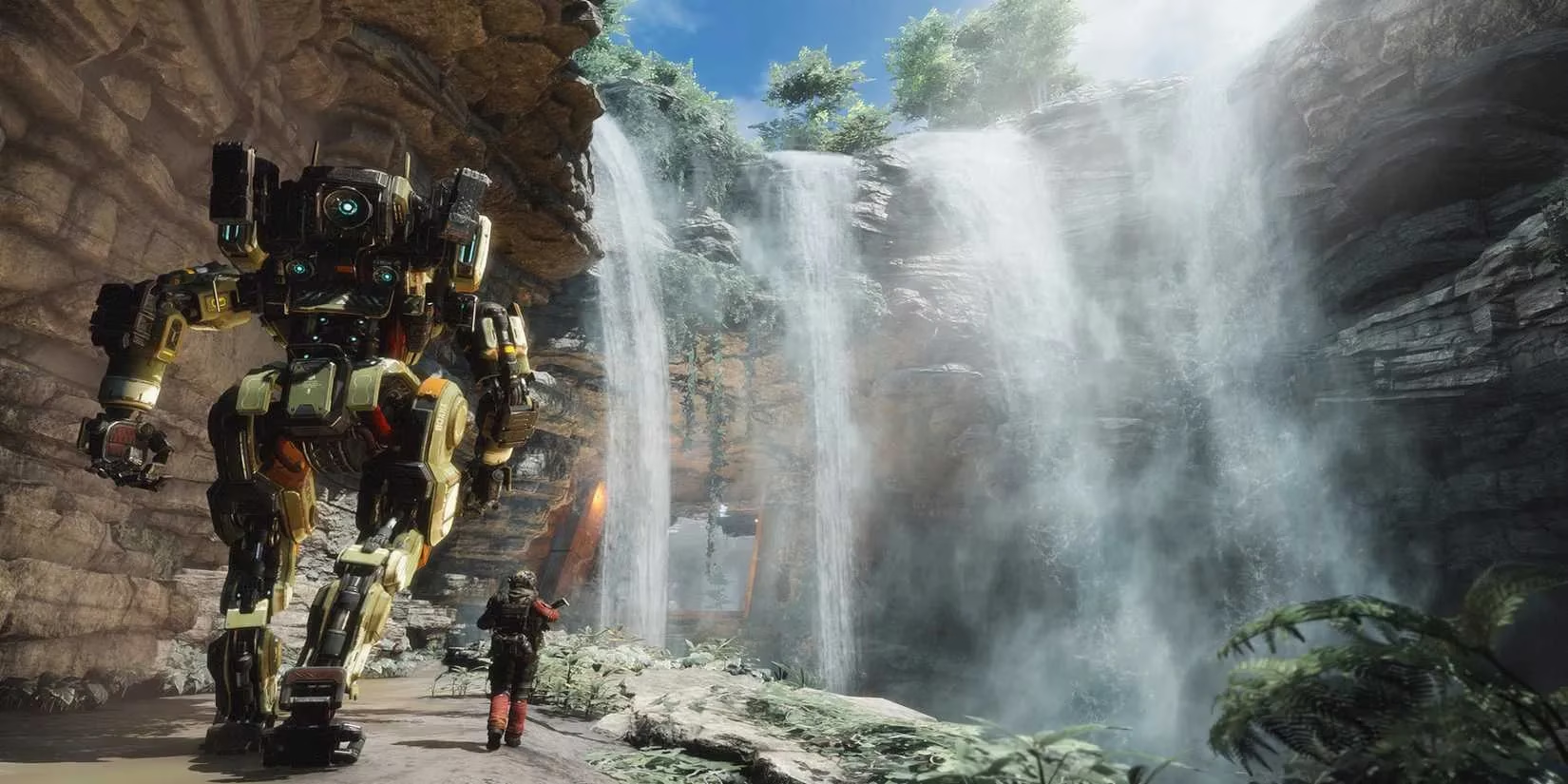
The Titanfall series represents the zenith of kinetic freedom in the FPS genre, a duet of scale and speed that remains unmatched. It is celebrated for two revolutionary pillars. First, the seamless integration of pilot and Titan gameplay. As a nimble Pilot, you can call down and command a giant, hulking mech, shifting the combat from acrobatic skirmishes to titanic, lumbering duels—a balancing act Respawn Entertainment mastered. Second, and most indelibly, is the Pilot's movement. The ability to effortlessly skate across walls, chain slides, and utilize a jetpack creates a flow state of motion that feels like flying. The battlefield becomes a three-dimensional playground. This legacy of unparalleled movement directly birthed the mechanics of Apex Legends, cementing Titanfall's influence. It is a franchise that made players feel not just powerful, but truly, joyously liberated in their motion, a love letter to momentum that still echoes through the genre.