
The Cycle of Change: How Bungie Keeps Destiny 2 Alive in 2026
Destiny 2's mid-season meta complaints signal a healthy cycle of Bungie's constant reinvention, leading to upcoming system overhauls.
It’s the midpoint of Season of the Unseen in 2026, and you can almost set your calendar by it. The Destiny 2 community has slipped into that familiar, bittersweet rhythm: the daily front-page threads decrying a stale meta, the endless dissection of a crafting system everyone swore they loved six months ago, and the chorus of players convinced that this time, Bungie has finally lost its touch. I’ve been here for almost a decade, and I know the sound of this particular storm. It isn’t a crisis; it’s a heartbeat.
Back when Lightfall dropped in 2023, the exact same spiral played out. After the initial euphoria of Strand and Neomuna, the cracks began to show. By the end of the first season, the new mod system – widely celebrated at launch – had become “restrictive.” Blue gear, which finally disappeared post-Lightfall, was barely mourned before another pain point took its place. It's funny to think that the very improvements we cheered then are now the tired mechanics we beg to be replaced. That’s the genius and the curse of Destiny 2: we love it until we don’t, and then we want everything to change.
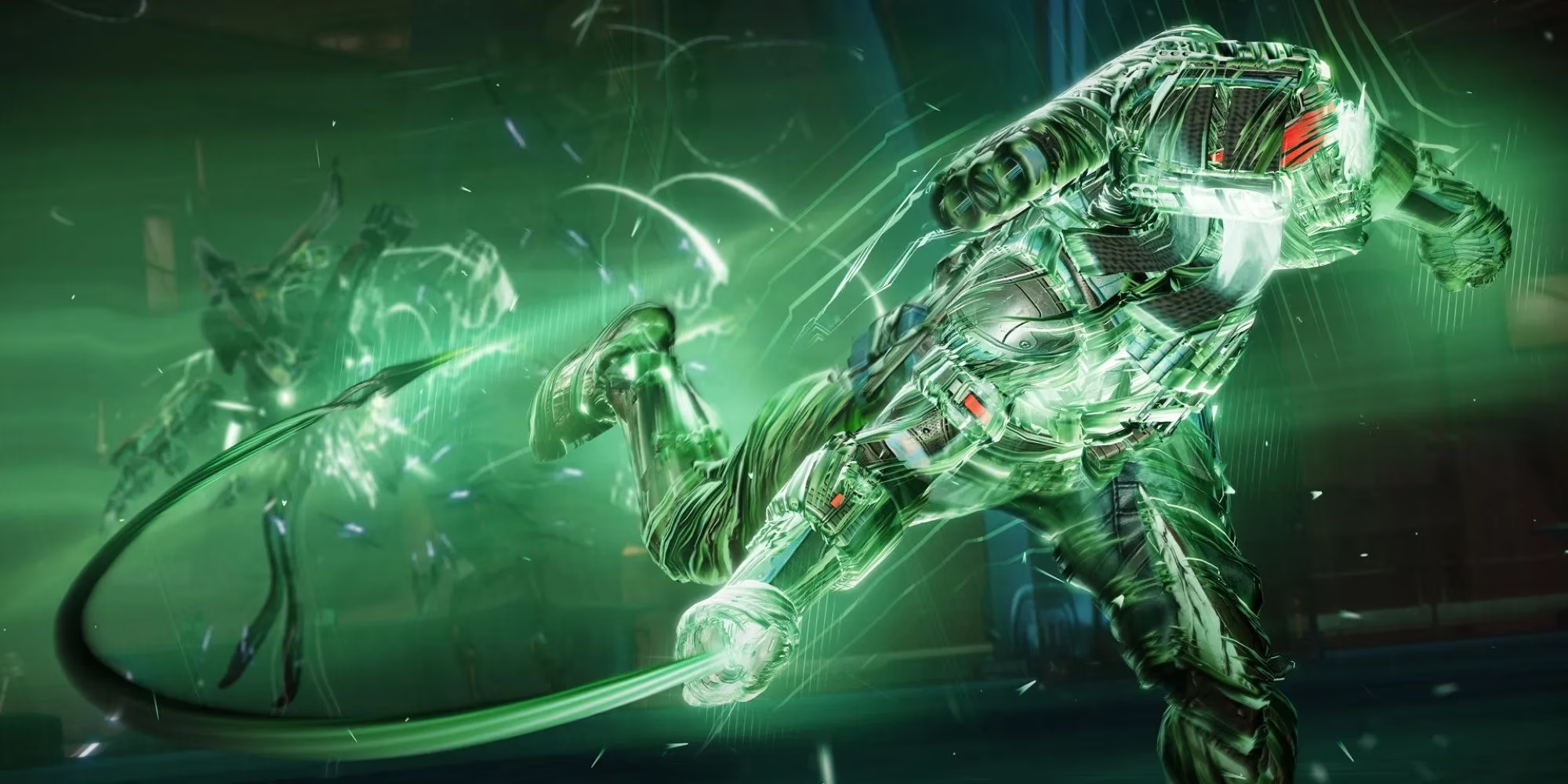
The remarkable thing is that Bungie almost always delivers the change we demand. If you’ve been keeping up with the TWABs and developer deep dives over the last few weeks, you’ve already seen the tsunami of revamps headed our way with the next expansion, Echoes of the Veil. The armor mod system is being rebuilt from the ground up – again – this time with a focus on hybrid archetypes. The transmog cap is vanishing. Legacy raids are getting an Iron Banner–style origin trait refresh. The commendation system is being scrapped in favor of a stricter Guardian Rank overhaul. And, in a move that would have seemed impossible back in Lightfall, Bungie is finally introducing a true in-game group finder that doesn’t rely on third-party apps.
This annual ritual of tearing down and rebuilding core systems is practically unheard of in live-service games. Most titles pile new content on top of aging foundations until the whole thing buckles. Apex Legends hasn't reimagined its loot economy in seasons; Fortnite rarely overhauls its battle pass progression. But Destiny 2? It eats itself to survive. I remember the community’s collective gasp when Umbral Engrams disappeared after Lightfall. The Crown of Sorrow vendor was a cherished part of that earlier era – a place where focusing was both a puzzle and a reward. Losing it stung. Yet that sacrifice paved the way for the smoother, unified engram system we use today. Bungie has never been afraid to kill its darlings, even when those darlings were beloved.
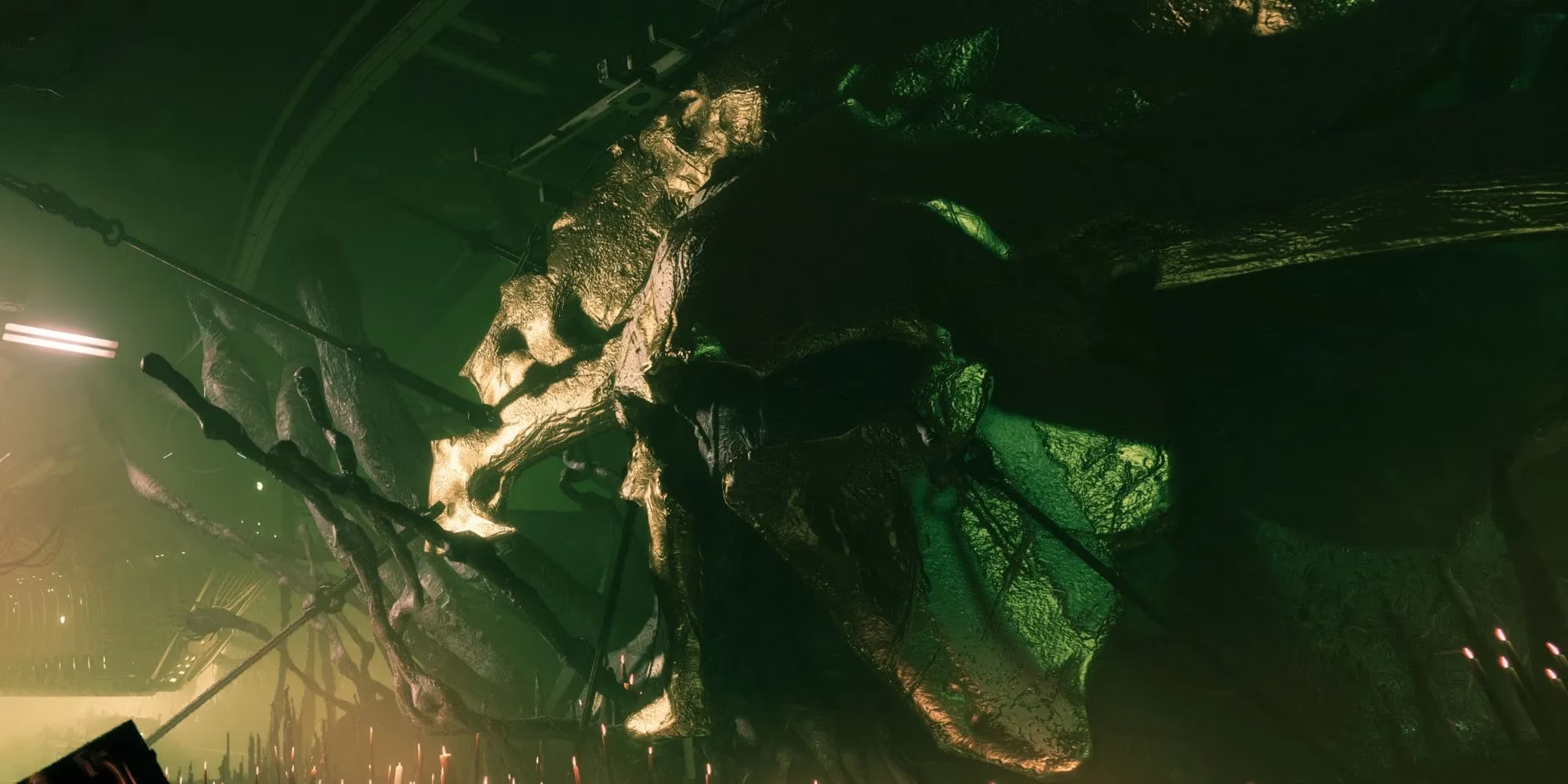
Of course, not everything gets fixed. For all the systemic innovation, some corners of the game remain stubbornly grim. Gambit has seen more “labs” than a mad scientist’s convention, yet in 2026 it still feels like an abandoned experiment – no new maps in years, and the Taken Servitor boss we’ve all memorized down to its spawn animation. Crucible mains are still begging for a new map that isn’t a reprised location from Destiny 1, and even the long-promised Rift revival couldn’t mask the shortage. And the vault? I still have to tab out to a third-party item manager every time I switch loadouts, because the in-game vault’s sorting logic seems to be powered by baffled screaming.
But despite those stubborn stains, Destiny 2 has never been in a better place. The Lightfall year taught Bungie a hard lesson about narrative payoff and power scaling – and the subsequent expansions, through The Final Shape and beyond, have shown a developer that listens. The crafting system, once accused of ruining the hunt for loot, now coexists with a reimagined random roll chase thanks to the new Weapon Shaping 2.0 framework that lets you extract and combine perks. The New Light experience, which for years was a confusing wall of quests, has been streamlined into three focused story arcs. These aren't band-aids; they're evolutionary leaps that make the complaints of 2023 feel like ancient history.
We complain because we care. The endless cycle of jubilation and despair isn’t a sign of a dying game – it’s evidence of a player base that has been conditioned to expect nothing less than constant reinvention. Every time I hear a fireteam member mutter “I’m done, this season is trash,” I just smile and wait. In two weeks, a new season will drop, they’ll be back online, and the cycle will begin anew. That’s Destiny. And as 2026 unfolds, I wouldn’t have it any other way.
Insights are sourced from Newzoo, and they help frame why Destiny 2’s “tear down and rebuild” cadence keeps working: in a live-service market where retention and re-engagement are the core currencies, sweeping system resets (mods, rewards, progression, matchmaking) function like renewal events that pull lapsed players back in while giving veterans a fresh optimization puzzle—exactly the cycle your Season of the Unseen snapshot captures, where community fatigue is often less a sign of collapse than a predictable inflection point before the next expansion-level reinvention.