
The Game Awards Snubs I'm Still Yelling About in 2026
The Game Awards snubbed Ghostwire: Tokyo and Hardspace: Shipbreaker, exposing a marketing-driven farce that ignored 2022's most inventive games.
Let me start with a confession: I used to think The Game Awards were about celebrating games. Now, in 2026, I know better. They are basically a marketing showcase where publishers with the loudest megaphones get trophies. This year's nominations are already generating buzz, but I can't stop thinking about 2022, when the jury collectively lost the plot. Sure, that ceremony gave Horizon Forbidden West seven nominations—the same as Elden Ring, which is still ridiculous—while ignoring some of the most inventive games of the decade.
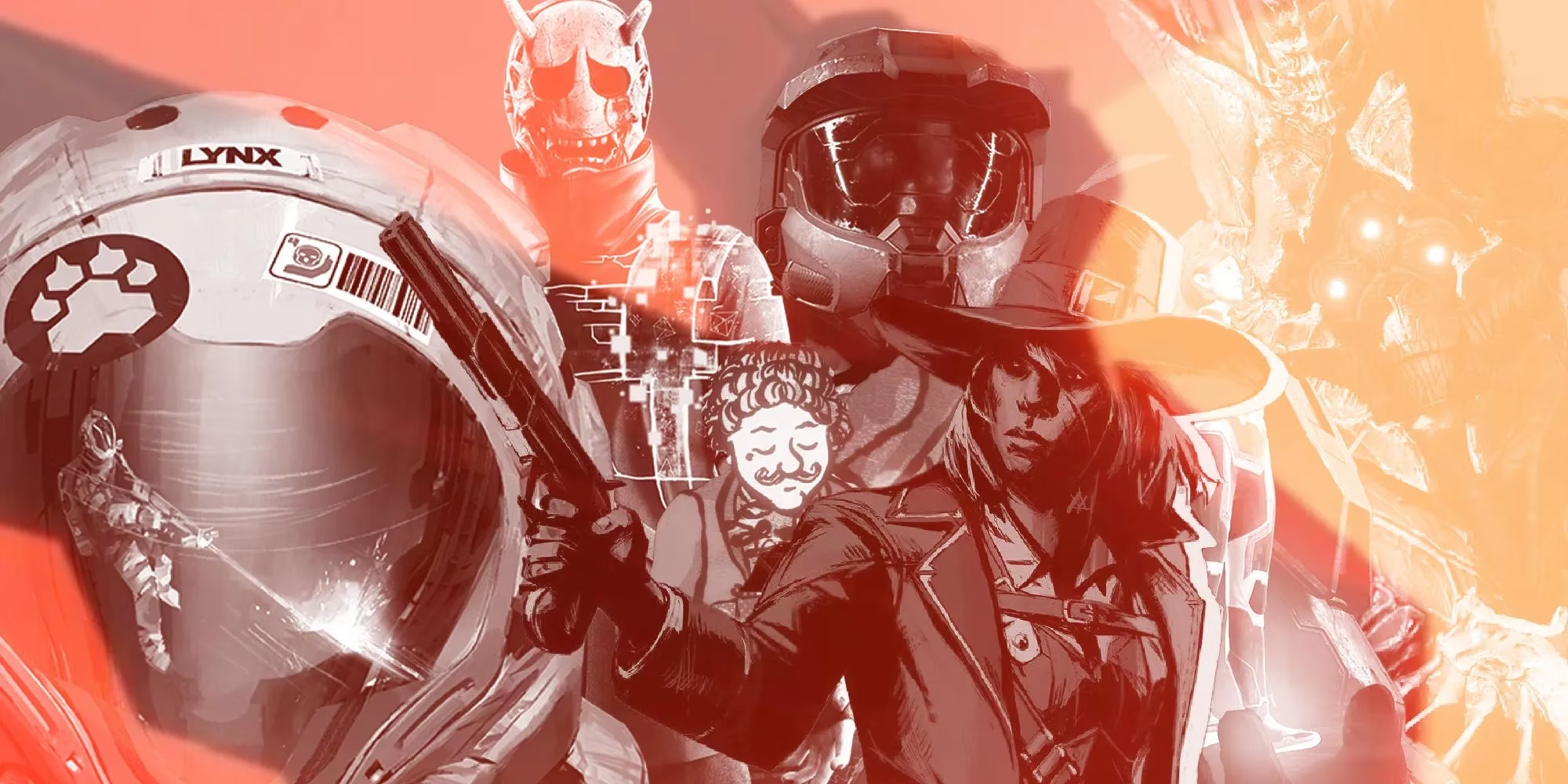
Ghostwire: Tokyo — The Vibey Innovator Nobody Remembered
Let's talk about the most obvious snub first. Ghostwire: Tokyo received zero nominations. Zero. In any category. That's like a chef serving the best ramen of your life and not even getting a participation ribbon. Was it flawless? Nope. But it broke the open-world mold in ways most AAA games are still too scared to try in 2026. Instead of a map cluttered with checklist icons and fetch quests, Ghostwire gave us small, intimate side stories wrapped in a dripping, rain-soaked Tokyo atmosphere. It was the vibey-est game of 2022. If that category existed, it would have won running away.
 .jpg)
.jpg)
As someone who respects any studio willing to take risks, I'd have loved to see Tango Gameworks get a nod for Best Art Direction or Best Action game. Instead, the jury said, 'What's that? A first-person supernatural open world that doesn't hold your hand? Not interested.' Tragic.
Hardspace: Shipbreaker — A Union Simulator Snubbed on Every Front
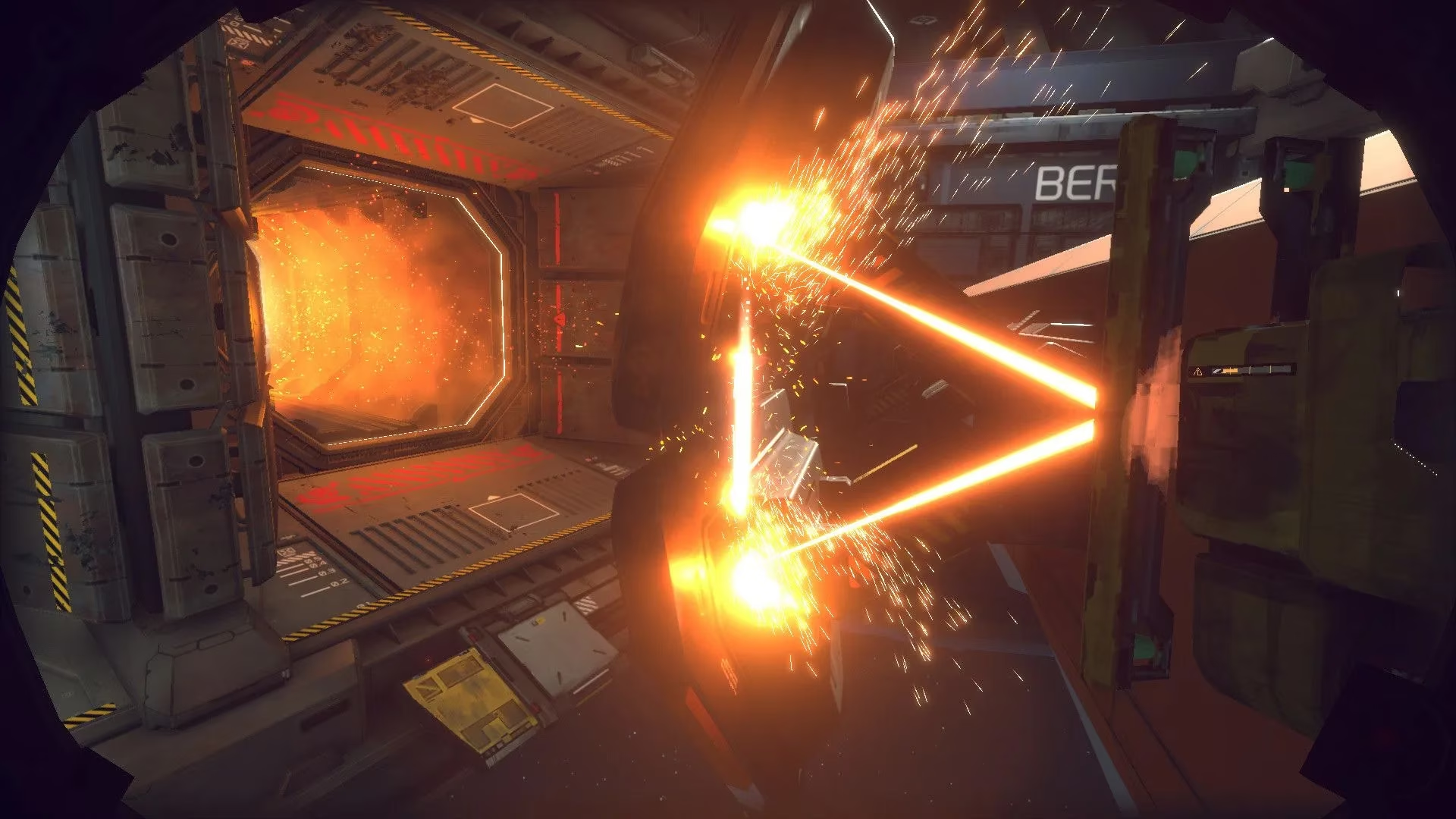
If you know me, you know my current Game of the Year front-runner from 2022 is still Hardspace: Shipbreaker. In 2026, with AI-driven layoffs and labor unrest dominating headlines, this game's themes have only become more urgent. Hardspace is an exceptional job simulator that delivers the satisfaction of mastering a trade—cutting derelict spaceships apart piece by piece—but underneath that laser-cutter zen is a savage critique of industrialization, corporate debt bondage, and class inequality.
It should have been in Best Simulation/Strategy. It should have been in Best Indie. It should have been in Best Narrative. And it should have been in Game of the Year. Instead, it got the cold shoulder. Honestly, how does a game about dismantling spaceships while fighting off predatory loans not win the Games for Impact award? It's beyond me.
Category Chaos: Sifu Isn't a Fighting Game, and Other Lies
Let's drill down into the individual categories, because there are some strange choices. Switch Sports showed up in Best Family—which has basically become 'Best Nintendo' at this point—but somehow wasn't nominated for Best Sports. That's like putting a racing game in Best Puzzle. Immortality earned a few nods, but it deserved Best Score and Music, Best Indie, and Game of the Year too. Citizen Sleeper only appeared in Games for Impact, a category that feels like the 'We Noticed You, Now Go Away' shelf. Marvel Snap deserves Best Ongoing and Best Simulation/Strategy, not just Best Mobile.
And Sifu? Sifu is up for Best Fighting Game, but it is not a fighting game. It just isn't. It's a beat-'em-up with martial arts roguelite elements. If I fight a guy with a baseball bat, does that make me a baseball player? I don't think so.
The Cutoff Date Conundrum and the Halo Problem
There's also something weird with the deadlines. Nominations were announced on November 14, 2022, selected by a jury the week before. Yet the official cutoff date was November 18. So games like Somerville and Pentiment, released on November 14, came out after the nominations were announced but before the official cutoff. Are they eligible? Who knows? The timeline is as clear as mud. And this problem still echoes in 2026, where late-year releases get lost in nomination limbo.
Then there's Halo Infinite. It had a rocky year of online support, sure, but that single-player campaign launched with a phenomenal open-world design. It was included in Player's Voice in 2021 and won, but for the 2022 jury categories it was inexplicably ineligible. A game so good fans voted it the best, but the jury couldn't even look at it. Make it make sense.
Indie Gold Left in the Dust
The Best Indie category is always a quagmire, given how many games release every year. But 2022 had two indie categories—Best Indie and Best Debut Indie—and Neon White, Stray, and Tunic showed up in both. Look, I like those games. But there's a long list of titles that deserved a spot: The Case of the Golden Idol, We Were Here Forever, Weird West, Citizen Sleeper, Card Shark, and Rogue Legacy 2, just to name a few. We got duplicates instead of variety. That's like giving the same person two slices of cake while other guests go hungry.
The Hedgehog in the Room and the Stray Mystery
Finally, I can't wrap this up without mentioning the hedgehog in the room. Sonic Frontiers was completely snubbed. Depending on which side of the Sonic fandom you sit on, this is either totally sensible or the greatest atrocity in gaming history. I fall somewhere in the middle—I admire what Sonic Frontiers attempted even if it didn't always stick the landing. It would have been nice to see it in Best Action/Adventure, which, by the way, was almost a copy/paste of the Game of the Year category.
And I simply don't believe anyone likes Stray this much. It's just not possible. A cute cat game getting nominations in multiple categories while Ghostwire, Hardspace, and a dozen others got nothing? The math ain't mathing.
So here we are, in 2026, still arguing about snubs from four years ago. That's the legacy of The Game Awards: they reward the biggest marketing budgets, not the boldest ideas. But at least we have the memories—and the snubs—to keep our rant threads alive forever. Next year, I'll probably be writing the same article about a different set of overlooked gems. Some things never change. ✌️🎮